

By Daniel Rothenberg, Sports Chiropractor, Scope Sports Injury & Exercise Clinic, East Ipswich
Returning to training after shoulder surgery can involve more than rebuilding strength. For Leah, it also meant rebuilding trust in a shoulder that had let her down repeatedly.
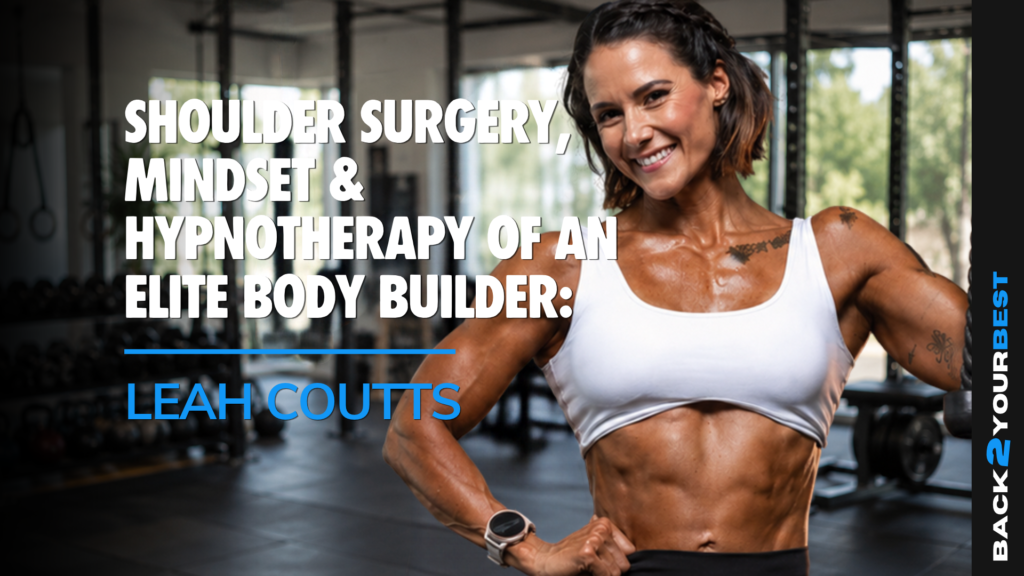
In this episode of the Back 2 Your Best Rehab Podcast, I sat down with Leah—a professional bodybuilder, five-time national champion, two-time world champion and accredited hypnotherapist—to discuss her experience of shoulder pain, multiple surgeries and returning to exercise.
Having worked together over several years, we’ve had many conversations about what recovery means to her. Her story reflects something we regularly discuss at our East Ipswich clinic: rehabilitation needs to consider the person, their goals and their confidence, alongside the injury itself.
From losing movement in her arm to world champion
Leah’s shoulder problems began at 19, when she suddenly lost movement in her arm. At the time, she was studying music, playing piano and enjoying an active life.
What followed were years of recurring symptoms, uncertainty and several operations. She describes periods of nerve pain, difficulty using her arm and advice to stop activities she loved. Even after further surgery, returning to the gym felt intimidating.
With coaching and rehabilitation support, she gradually returned to training and went on to win national and world bodybuilding titles.
Those achievements matter to Leah because of what they represent: discovering what she could do after years of uncertainty about her body.
Adapting training around her shoulder
One of the clearest messages from our conversation was that Leah’s success involved adapting her training to suit her shoulder.
She explained that overhead pressing had not been a suitable exercise for her. Bodybuilding gave her opportunities to train muscles through other exercises and positions that better suited her capacity.
Her experience highlights a useful question to discuss during shoulder rehabilitation: what options can help you work towards your goal at this stage?
For Leah, that meant accepting some movement limitations while continuing to pursue meaningful training. Exercise selection, load and progression needed to reflect her individual situation.
Another surgery—and a difficult decision
During preparation for another competition, Leah’s shoulder began deteriorating. Eventually, she struggled to lift her arm into a bodybuilding pose.
Further surgery identified problems including a labrum that had come away from the bone again, loose stitches and scar tissue. Facing another recovery period was emotionally difficult, particularly after everything she had already worked through.
Leah described feeling torn between her identity as a competitive bodybuilder and the reality of needing time to recover. Taking a deliberate hiatus helped her focus on rehabilitation without making an immediate decision about future competition.
For that period, rebuilding trust in her shoulder became the priority.
Pain, mindset and the fear of another setback
After one period of improvement, Leah did more than her shoulder was ready to tolerate and experienced increased symptoms. Her immediate thought was that the surgery had failed.
Given her history, that fear was understandable. She later described how a review and treatment helped her regain movement and reconsider her initial conclusion.
Pain is a real, personal experience influenced by biological, psychological and social factors, as recognised by the International Association for the Study of Pain. Understanding those influences allows us to take both the symptoms and the person’s concerns seriously.
Leah’s story shows how quickly previous experiences can shape the meaning we give a new symptom. It also highlights the value of reviewing a change with your treating clinician rather than having to interpret it alone.
Leah’s personal experience with hypnotherapy
As an accredited hypnotherapist, Leah brought another perspective to our conversation.
She recalled a discussion during her hypnotherapy training about pain-management techniques. Although the discussion concerned helping someone else, she noticed a significant reduction in her own shoulder pain.
This was Leah’s personal experience. It does not establish that hypnotherapy repairs shoulder injuries or predicts how another person will respond. Her shoulder still required surgical care and rehabilitation.
What made the discussion valuable was her reflection on the relationship between pain, fear, previous experiences and confidence—and how those experiences sat alongside the physical problems in her shoulder.
Recognising the progress that matters
At the time of recording, Leah was approximately 14 weeks after her latest surgery. She described being able to wash her hair, get dressed and prepare meals more comfortably, alongside returning to some light gym exercises.
A light pulldown or cable row might seem ordinary from the outside. For Leah, those movements represented meaningful progress towards feeling capable again.
She was still adapting her training, and her return to competition remained undecided. Her recovery was ongoing.
Her advice was to meet your body where it is, show yourself compassion and recognise that what progress looks like can change from day to day.
Hear the full conversation
Look for “Shoulder Surgery, Mindset & Hypnotherapy of an Elite Bodybuilder” on the Back 2 Your Best Rehab Podcast, available on Spotify, Apple Podcasts and YouTube.
Learn more about Leah’s work at You Ignited or connect with her on Instagram at @withleahmarie.
Shoulder rehabilitation in Ipswich: Back 2 Your Best
If shoulder pain, surgery or a recurring injury has interrupted your training, our Back 2 Your Best Rehab Program provides an individualised approach to rebuilding strength, capacity and confidence.
Based at Scope Sports Injury & Exercise Clinic, 5 Jacaranda Street, East Ipswich, our rehab membership brings together:
- Individualised whole-body programming, adapted to your injury, goals and current capacity.
- Access to a full glinical gym and expert rehab coaches
- Expert rehab coaching to guide technique, exercise selection and progression.
- Sports Chiropractic appointments and hands-on treatment as part of your rehabilitation plan.
- Progress testing and program reviews to guide your next steps.
- Access to our rehab gym and ongoing support, helping you put your plan into practice.
These services come together under one membership, with your clinical care and coached training coordinated under one roof.
Whether your goal is returning to the gym, getting back to sport or feeling more capable in everyday life, we’ll help you understand your starting point and build a plan around what matters to you.
Explore the Back 2 Your Best Rehab Program and membership options.