Category: Sports Chiropractic

Sports Chiropractic
Daniel Rothenberg

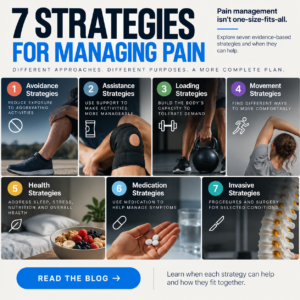
7 Strategies for Managing Pain: What Works, When and Why

Pain management isn’t one-size-fits-all. From activity modification and medication to movement, exercise and rehabilitation, explore seven strategies for managing pain and how to choose the right approach for both short-term relief and long-term recovery.


Read More »
Sports Chiropractic
Daniel Rothenberg

Iliotibial Band Syndrome in Runners: What You Need to Know (and Do About It)

If you’re a runner and you’ve been feeling a sharp, nagging pain on the outside of your knee – especially during or after a run – you might be dealing with Iliotibial Band Syndrome, or ITB Syndrome. It’s one of the most common overuse injuries in runners, and the good news is: with the right approach, it’s treatable and preventable.

Read More »
Sports Chiropractic
Daniel Rothenberg

Why Muscle Is Essential for Your Health: Strength, Pain, and Long-Term Well-being

When people think about muscle, they often focus on its role in sports performance or aesthetics. But muscle is far more than just strength or appearance—it’s one of the most critical components of long-term health, resilience, and recovery. Having strong, healthy muscles isn’t just about lifting heavy or looking fit; it’s about protecting your body against injury, managing pain, and

Read More »
Lower Back Pain
Sports Chiropractic
Daniel Rothenberg

Lower Back Pain Relief Program: Your Guide to Recovery

Lower back pain can be frustrating, unpredictable, and sometimes alarming. Whether it’s a dull ache or a sudden flare-up, it can disrupt daily life and make even the simplest movements feel daunting. But here’s the good news: your back is strong, resilient, and capable of recovery. With the right approach, you can find relief, regain confidence in movement, and prevent

Read More »
Sports Chiropractic
Daniel Rothenberg

5 Simple Strength Exercises For Lower Back Pain

If you’re struggling with lower back pain, the best approach isn’t just rest—it’s movement. Strengthening the muscles that support your spine can improve resilience, reduce discomfort, and help prevent future issues. Whether you’re recovering from an injury or just looking to bulletproof your back, these five simple exercises are a great place to start. To download free programs head to

Read More »
Sports Chiropractic
Daniel Rothenberg

Spinal Surgery Rehab Ipswich

Lower Back Spinal Surgeries: What to Expect & How to Rebuild Stronger Lower back pain can be persistent, and for some, surgery becomes a necessary step toward relief. While surgery can help address structural issues, the real work begins afterward—rehabilitation. Taking an active approach to recovery is the key to regaining strength, mobility, and long-term function. If you’re looking for

Read More »
Sports Chiropractic
Daniel Rothenberg

Back 2 Your Best Sponsorship Program

Back 2 Your Best: Supporting Local Comeback Stories We believe in resilience. We see it every day—the incredible ability of the human body to adapt, recover, and come back stronger. We also know that behind every great comeback, there’s a story of determination, struggle, and ultimately, triumph. That’s why we created the Back 2 Your Best Sponsorship Program—a way to

Read More »
Sports Chiropractic
Daniel Rothenberg

The Benefits of Steady-State Training (LISS or Zone 2) for Health, Wellness, and Pain Management

Steady-state training, often referred to as Low-Intensity Steady State (LISS) or Zone 2 training, is a form of exercise that emphasizes maintaining a moderate, consistent pace for an extended period. This style of training contrasts with high-intensity interval training (HIIT) and focuses on sustainability, endurance, and recovery. For many individuals, particularly those managing chronic pain or seeking to enhance overall

Read More »
Sports Chiropractic
Daniel Rothenberg

The Limitations of MRI, CT, and X-ray Scans for Lower Back Pain – And Why Movement, Strength, and Support Matter

If you’re dealing with lower back pain, it’s natural to want to get a scan—whether it’s an MRI, CT, or X-ray—to figure out what’s going on. However, these scans often don’t tell the full story when it comes to everyday back pain. They can sometimes lead to unnecessary treatments or cause more anxiety than relief. In most cases, the key

Read More »