

By Daniel Rothenberg, Sports Chiropractor, Scope Sports Injury & Exercise Clinic, East Ipswich
How do you keep showing up to rehabilitation when you’re putting in the work but progress feels painfully slow?
For Courtney, an Ipswich FC soccer player and electrical apprentice, that question became part of everyday life after an ACL injury. Her recovery involved surgery, persistent knee stiffness, another procedure and months of working towards goals that sometimes felt a long way off.
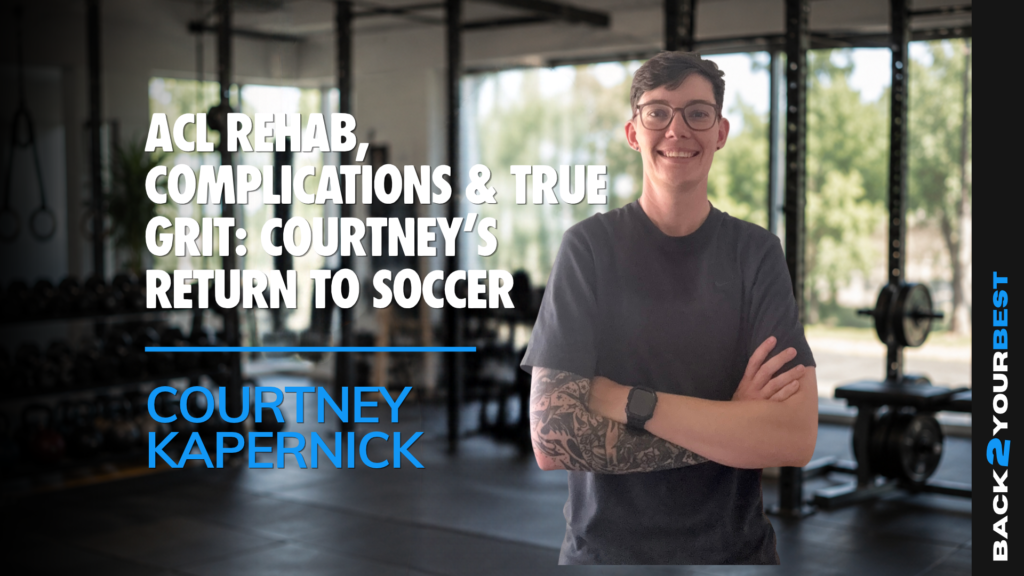
In this episode of the Back 2 Your Best Rehab Podcast, Courtney shares her experience of rebuilding over approximately 18 months. It is a story of true grit, but also of learning to adjust expectations, recognise small wins and accept support.
Having worked with Courtney throughout that journey at our East Ipswich clinic, I’ve seen how much those quieter moments of rehabilitation mattered.
A soccer injury that changed more than her season
Courtney was playing in a closely contested match when she went shoulder to shoulder with an opposing player and landed on the ground. She heard a crack and, when she tried to stand, realised she couldn’t get up.
An initial X-ray ruled out a fracture. After the swelling and difficulty bearing weight persisted, an MRI confirmed an ACL injury.
The impact extended beyond soccer. Courtney’s work involved being on site and moving across uneven surfaces. Her injury interrupted her sport, her job and the active lifestyle she enjoyed.
When we first met, her knee was very painful and difficult to move. Even turning over on the treatment table was a challenge.
Preparing for ACL surgery
Our initial plan, in consultation with her surgeon, was to improve her knee movement and settle the pain and swelling before surgery.
Courtney made progress with bearing weight, but bending and straightening the knee remained difficult. The plan needed to respond to how her knee was actually progressing.
She eventually underwent ACL reconstruction, along with treatment to her meniscus. Although she felt improvements after surgery, restoring movement remained a significant hurdle.
When stiffness meant another procedure
At her six-week postoperative review, Courtney still struggled to bend her knee beyond approximately 90 degrees. Her surgeon identified scar tissue as a contributing factor and recommended a manipulation under anaesthetic—a procedure intended to improve restricted movement while the patient is under anaesthetic.
Courtney felt the procedure helped, but it added another challenge to a recovery that had already been demanding.
She also learned that determination could not force her knee to recover faster. She needed to keep working while respecting its response and adapting the plan with her treating team.
True grit in the everyday work of ACL rehab
Courtney attended the rehab gym two or three times a week and worked on prescribed exercises and mobility at home between sessions.
There were periods when the effort was clear but the improvements were difficult for her to see. She described it as feeling like she was hitting her head against a brick wall.
Watching her continue to attend, practise and work towards her goals was inspiring. That persistence was supported by a changing approach to goal setting.
Getting back to soccer remained important, but she realised it could not be her only measure of progress.
Smaller goals gave her reasons to keep going
One of Courtney’s earlier goals was returning to work on site. That gave her a practical reason to rebuild strength and stability for walking across uneven ground.
She also worked on recognising a small win each week. A movement becoming easier or an exercise feeling more controlled helped make progress more visible.
Comparing her recovery with professional athletes had made her own timeline feel disappointing. Focusing on the next achievable step gave her something more useful to work towards.
Her long-term goal stayed in view, with smaller goals helping her navigate the distance between.
Why the rehab environment mattered
Courtney spoke about the value of training around other people who were also working through injuries.
Coaches and fellow members noticed changes she sometimes missed: an exercise looking easier, movement becoming smoother or confidence growing. Hearing those observations helped her recognise that progress was happening.
She also reflected on the emotional side of recovery. Looking back, she wished she had spoken more openly about how difficult it felt.
Her message to others was to talk about the setbacks and avoid letting them define the whole rehabilitation experience. Having people around her who understood the process made a difference.
Returning to running after ACL reconstruction
For Courtney, running again was a major turning point.
She had missed it for well over a year. Returning to it helped her feel closer to choosing whether she wanted to play soccer again, rather than having the injury make that decision for her.
At the time of recording, she had also started playing six-a-side soccer. She was still learning to manage how much she did and how her knee responded. Her return remained a process of rebuilding tolerance and confidence.
For people working towards running after ACL reconstruction, readiness involves more than reaching a date on the calendar. The Aspetar rehabilitation guideline recommends considering clinical and functional factors alongside time, including knee movement, swelling, strength and tolerance of hopping. These are proposed criteria informed by evidence and expert opinion; they need to be interpreted for the individual by the treating team.
Running is also one stage of returning to soccer. Faster running, stopping, changing direction and responding to other players introduce further demands that need preparation.
Hear Courtney’s full story
Look for “ACL Rehab, Complications & True Grit: Courtney’s Return to Soccer” on the Back 2 Your Best Rehab Podcast, available on Spotify, Apple Podcasts and YouTube.
Courtney’s experience offers an honest picture of a complicated recovery: consistent effort, changing plans, frustration, support and meaningful progress that became clearer over time.
Specialised ACL rehabilitation in Ipswich with Back 2 Your Best
Our Back 2 Your Best Rehab Program offers specialised rehabilitation for people recovering from ACL injuries, including surgical and non-surgical management.
Based at Scope Sports Injury & Exercise Clinic, 5 Jacaranda Street, East Ipswich, the program brings clinical care, coached rehabilitation and gym training together under one membership.
We build an individualised plan around your knee, your recovery stage and the demands of your work, exercise or sport. That includes adapting the program when stiffness, pain or other setbacks complicate progress.
From early rehabilitation to return-to-run training
Your rehabilitation can progress from restoring knee movement and rebuilding strength through to preparing for running and sport, according to your assessment and treating team’s guidance.
Our ACL rehabilitation approach includes:
- Individualised whole-body strength programming: developing the quadriceps, hamstrings, calves, hips and wider physical capacity needed for your goals.
- Expert rehab coaching: guidance with technique, exercise selection, loading and progression.
- Progress testing and reviews: assessing strength, movement and functional capacity to inform the next stage.
- Structured return-to-run training: preparing for impact, introducing running progressively and adjusting running load around your capacity and response.
- Field-based rehabilitation: progressing towards acceleration, deceleration, change of direction and sport-specific demands when appropriate.
- Clinical appointments and hands-on treatment: integrated with your exercise plan and communication with your wider treating team where needed.
Ongoing support under one membership
The Back 2 Your Best membership combines your individualised program, coached rehab sessions, clinical appointments, progress testing and rehab gym access under one roof.
It provides a consistent place to train, ask questions and have your program adjusted as your recovery develops. Return-to-run and field training connect the work you do in the gym with the activities you want to get back to.
Whether you are preparing for ACL surgery, rebuilding afterwards or finding it difficult to progress towards running and sport, we can assess where you are and discuss a plan for your next steps.
Explore the Back 2 Your Best ACL rehab program and membership options.